

Best Omega-3 Supplement for Dry Eyes (And Why Most Fish Oils Fail)
November 14, 2026Take one of your fish oil capsules right now and bite it open. If it tastes bitter, sour, or leaves a lingering, foul aftertaste, spit it out immediately. You might be swallowing rancid oil.
Most people take Omega-3s for better heart health, sharper focus, and relief from dry eyes.
But here is the uncomfortable truth: a massive portion of the Omega-3s on the market are not just a waste of money. Because of how they are processed and stored, they might actually be doing more harm than good.
Over the last few weeks, I dug into independent lab reports, clinical studies, and the manufacturing processes behind the biggest brands. And what I found is genuinely concerning.
Today, I am breaking down the four things you absolutely need to know before you swallow another fish oil capsule. Then, I will show you the one brand that actually gets it right, which is why Performance Lab Omega-3 is the one I recommend to most people.
Let us get into it.
The Uncomfortable Truth About Omega-3 Supplements
The Omega-3 supplement market is worth billions of dollars, and for good reason. These essential fatty acids have been extensively studied for their benefits to heart health, brain function, eye health, and inflammation reduction.
Millions of people take them daily, trusting that they are investing in their long term health.
But what many people do not realize is that the supplement industry is loosely regulated. Unlike pharmaceutical drugs, which must undergo rigorous testing and approval before reaching the market, dietary supplements are largely self-regulated. This means that the quality, purity, and even the accuracy of labels can vary dramatically from brand to brand.
When you buy a bottle of fish oil, you are trusting that the manufacturer has done everything right, sourced quality ingredients, processed them carefully, tested for purity, and accurately labeled the product.
Unfortunately, independent testing repeatedly shows that many products fail on multiple fronts.
In my research, I identified four major pitfalls that affect a large percentage of Omega-3 products on the market. Understanding these pitfalls is essential to making an informed choice about which supplement to take.
Pitfall 1: The Rancid Oil Problem

The first thing you need to know is that Omega-3s are incredibly fragile. They are polyunsaturated fats, which means they oxidize and go rancid very easily when exposed to heat, light, or oxygen.
This is a fundamental chemical property of these fatty acids, and it makes them difficult to process, store, and deliver in a stable form.
And this is not a rare occurrence. Independent analyses show that roughly 40 to 50 percent of commercial fish oil products exceed voluntary oxidation safety limits. That means nearly half of the products on the market may be rancid or partially oxidized by the time they reach consumers.
Why Rancid Oil Is Harmful
Why does this matter? Because when an oil oxidizes, it does not just lose its health benefits. It produces toxic byproducts like aldehydes, which are linked to cellular stress and inflammation. These compounds can damage cells, trigger inflammatory pathways, and potentially contribute to the very health problems you are trying to prevent.
If you are taking a rancid fish oil supplement, you are essentially taking a pro-inflammatory substance when you intended to take an anti-inflammatory one. The oxidized oil can cause oxidative stress in your body, which is the opposite of what you want.
The Sneaky Way Manufacturers Hide Rancidity
Here is the sneaky part. Many manufacturers add artificial lemon or orange flavors to their capsules. That is not always just to make them taste nice. Often, it is used to mask the smell and taste of degraded oil so you do not realize you are swallowing a rancid product.
This practice is widespread in the industry and is a major red flag. If a product needs artificial flavoring to be palatable, you have to ask yourself what is being hidden. Fresh, high-quality fish oil should not need to be masked with lemon flavor.
While even fresh fish oil can occasionally cause mild reflux, if you bite into a capsule and it tastes sharply bitter or foul, or gives you intense, rancid fishy burps, that is a major red flag that the oil has gone bad. Your body is telling you something is wrong with the product.
How to Protect Yourself
The best way to avoid rancid oil is to look for products that are third-party tested for oxidation. These tests measure specific markers like peroxide value and anisidine value, which indicate how much oxidation has occurred. If a brand does not provide this testing, you have no way of knowing whether the product is fresh.
You should also avoid products that use artificial flavoring, as this is often a sign that the manufacturer is trying to hide a quality issue rather than address it.
Pitfall 2: The Absorption Trap

The second thing you need to know is that not all Omega-3s are absorbed equally. The form in which the oil is delivered makes a massive difference in how much your body can actually use.
Ethyl Esters vs. Triglycerides
Most cheap fish oils use a form called ethyl esters. This is a synthetic form created during the chemical purification process. It is cheaper to produce, but research shows that ethyl esters have significantly lower bioavailability, especially if you do not take them alongside a heavy, high-fat meal.
When fish oil is processed, the natural triglyceride structure is broken apart to concentrate the EPA and DHA. The resulting fatty acids are then re-attached to ethanol, creating ethyl esters. This form is more concentrated but less natural, and your body has to convert it back to triglyceride form before it can be absorbed.
This conversion process is inefficient. Studies have shown that ethyl ester Omega-3s are absorbed up to 50 percent less efficiently than triglyceride form. If you are taking a cheap ethyl ester capsule on an empty stomach or with a light breakfast, your body only absorbs a fraction of it. You are literally flushing your money down the toilet.
The Superior Form: Natural Triglyceride
The superior form is natural triglyceride. This is the natural molecular form found in whole fish and algae, and your body recognizes and absorbs it efficiently. Because it matches the form found in food, your digestive system can process it more readily, and more of the Omega-3s reach your bloodstream.
If your supplement label does not specify that it is in triglyceride form, assume it is the cheaper ethyl ester form. This is one of the most important things to look for when choosing an Omega-3 supplement.
The Meal Factor
Even with triglyceride form, absorption is improved when you take the supplement with a meal containing fat. Omega-3s are fat soluble, meaning they need dietary fat to be properly absorbed. Taking your fish oil on an empty stomach, even in triglyceride form, will result in lower absorption than taking it with a meal.
For best results, take your Omega-3 supplement with a meal that contains some fat even a small amount, like a few nuts or a drizzle of olive oil, can make a significant difference.
Pitfall 3: The Dosage Trap
The third thing is the dosage trap. This is one of the most common ways that consumers are misled by supplement marketing.
The Front of Bottle Trick
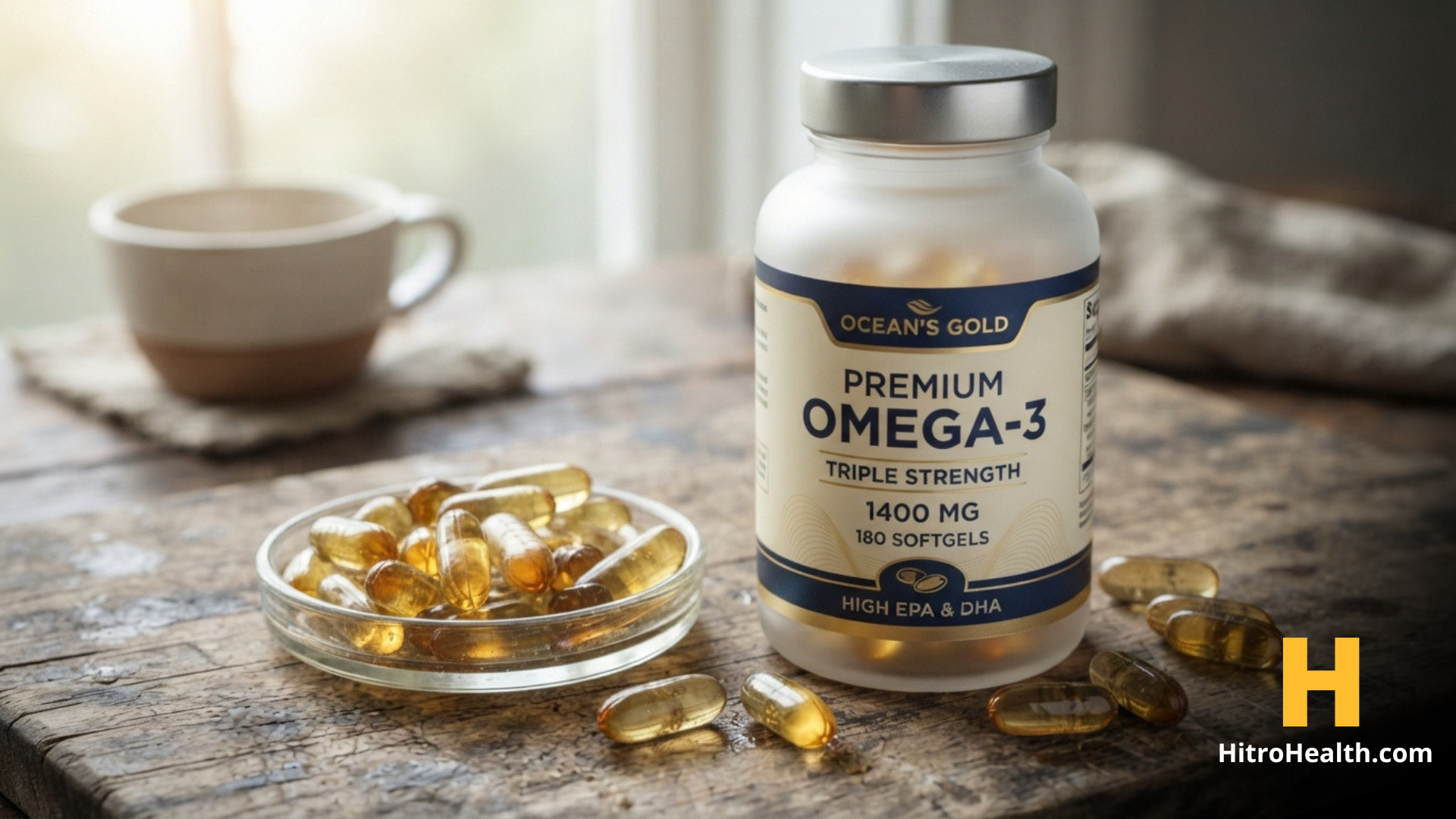
You see a bottle that says “1,000 mg Fish Oil” in huge letters on the front, and you assume you are getting a full gram of Omega-3s. Flip it over and look at the back label.
A UK consumer investigation by Which? found that supplements marketed as “high strength” often contained surprisingly low levels of the actual active ingredients, EPA and DHA. In one case, a popular 1,000 mg fish oil capsule contained just 250 mg of combined EPA and DHA. The remaining 750 mg was just filler fats.
This is a widespread practice. The “1,000 mg” on the front refers to the total weight of the oil in the capsule, not the amount of active Omega-3s. Much of that weight may be other fats that provide no benefit whatsoever.
Label Inaccuracy
Even worse, a study published in the Journal of Clinical Lipidology tested multiple lots of a leading fish oil supplement and found the actual Omega-3 content was 24 percent lower than what was printed on the label.
This means that even if you are carefully reading the back label, you may not be getting what you think you are getting. Label accuracy is a serious problem in the supplement industry, and it is another reason why third-party testing is essential.
What to Look For
Ignore the total fish oil weight on the front. Always look at the back panel for the combined EPA and DHA number. Health authorities like the Scientific Advisory Committee on Nutrition recommend at least 450 mg of combined EPA and DHA per day just for baseline health.
For specific health goals, the requirements may be higher. For example, research on Omega-3s for dry eye often uses 2,000 mg or more of combined EPA and DHA per day. For cardiovascular health, doses of 1,000 mg or more are commonly recommended.
The key is to look at the actual EPA and DHA content, not the total oil weight. A product that claims to be “1,000 mg fish oil” but contains only 300 mg of combined EPA and DHA is not a high strength product it is a low-quality product with clever marketing.
Pitfall 4: The Heavy Metal Risk
The fourth and final pitfall is contamination. This is perhaps the most concerning issue because it involves potential long-term health risks.
How Contamination Happens
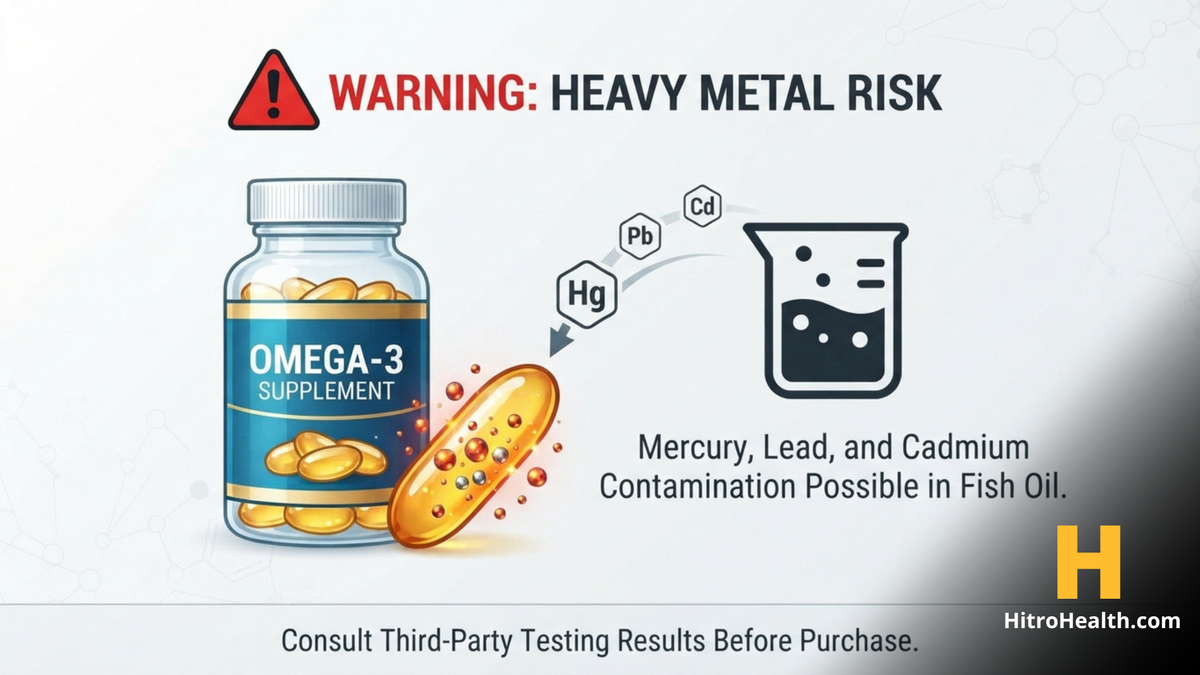
Fish do not actually produce Omega-3s; they get them by eating microalgae. Along the way, ocean fish accumulate heavy metals like mercury, along with PCBs and dioxins, in their fatty tissues. These toxins are persistent environmental pollutants that bioaccumulate up the food chain.
Larger predatory fish, like tuna, swordfish, and shark, tend to have the highest levels of these contaminants because they live longer and eat other contaminated fish. Smaller fish, like sardines and anchovies, tend to have lower levels, but no fish is completely free of contaminants.
If the oil is not rigorously purified, you are ingesting trace amounts of those toxins. While levels in most major brands are low enough to avoid immediate harm, if you are taking a supplement every single day for years, you want proof that it has been independently verified for purity.
The Cumulative Effect
The concern with heavy metals and other contaminants is not acute toxicity—it is cumulative exposure. Small amounts of mercury or PCBs consumed daily over decades can accumulate in your body and potentially cause health problems over time.
This is particularly concerning for vulnerable populations, including pregnant women, children, and people with compromised immune systems. For these groups, the risks of contaminated fish oil may outweigh the benefits.
The Importance of Third-Party Testing
If a brand does not provide third-party testing, you are taking a gamble. Third-party testing verifies that the product has been screened for heavy metals, PCBs, dioxins, and other contaminants, and that the levels are below safety thresholds.
Look for certifications from organizations like the Clean Label Project, NSF, or USP, which provide independent verification of purity and quality. These certifications indicate that the product has been tested by an organization other than the manufacturer, providing a higher level of assurance.
The Solution: Performance Lab Omega-3
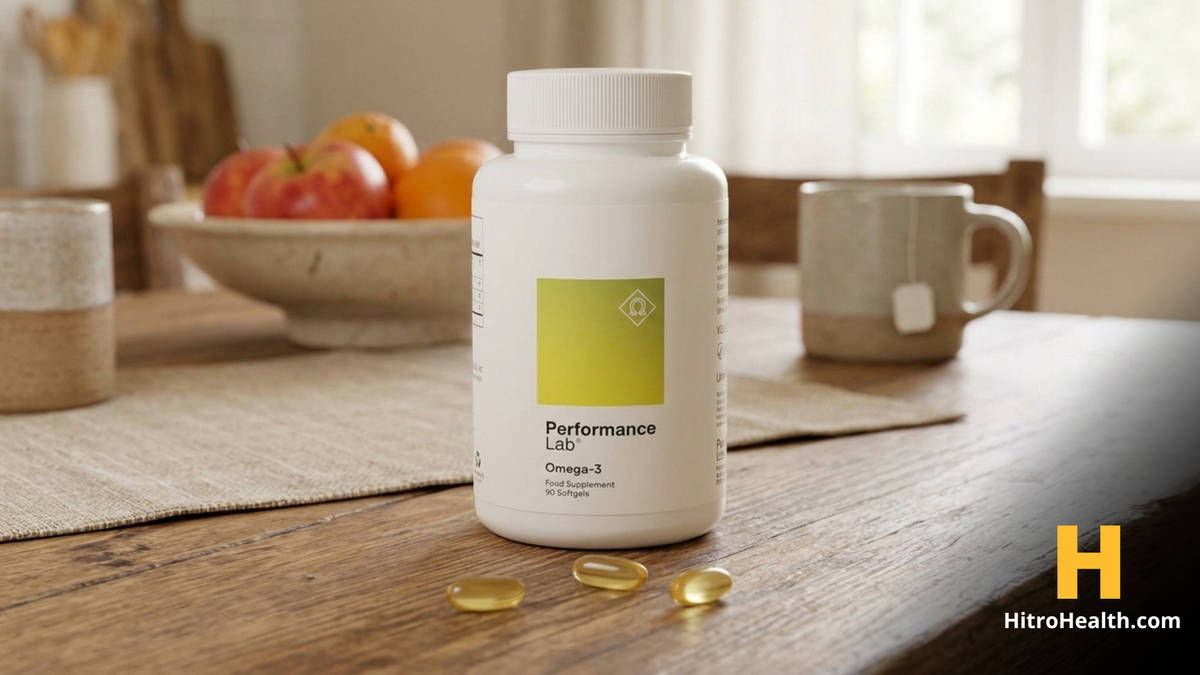
So, how do you avoid all four of these pitfalls without spending hours reading lab reports? This is why I recommend Performance Lab Omega-3. It addresses each of these issues directly and provides a clean, safe, and effective Omega-3 supplement.
Addressing Oxidation
First, on oxidation: Performance Lab uses algal oil, not fish oil. Because the algae is grown in a clean, controlled environment, it is far less prone to the oxidation issues that plague fish oils. There are no fish to accumulate toxins, no ocean contaminants, and no long supply chains where the oil can degrade.
Every single batch is third party tested for oxidation and freshness, so there is no artificial lemon flavoring needed to hide anything. The product is naturally clean and fresh, and the testing provides assurance that what you are taking is safe and effective.
Addressing Absorption
Second, on absorption: The oil is delivered in its natural triglyceride form, not synthetic ethyl esters, so your body absorbs it efficiently. Taking it with a meal is still a smart habit for any fat-soluble nutrient, but you are already starting with the superior form.
The triglyceride form ensures that your body can recognize and utilize the Omega-3s effectively, rather than having to convert them from a synthetic form first. This means more of the active ingredients reach your bloodstream and your cells.
Addressing Dosage
Third, on dosage: There is zero label trickery. Each serving delivers 990 mg of total Omega-3s, featuring 810 mg of active EPA and DHA, broken down into 540 mg of DHA and 270 mg of EPA. That 2:1 DHA-to-EPA ratio is specifically tailored to support brain, vision, and cardiovascular health.
The label clearly states the actual EPA and DHA content, so you know exactly what you are getting. There is no misleading “total oil weight” marketing, and no hidden filler fats. What you see on the label is what you get in the bottle.
Addressing Purity
And fourth, on purity: Because it is sourced straight from algae, you bypass ocean heavy metals entirely. There is no risk of mercury, PCBs, or dioxins accumulating in the oil, because the algae is grown in a controlled environment free from these contaminants.
On top of that, it is certified by the Clean Label Project, an independent organization that screens rigorously for heavy metals, pesticides, and plasticizers. This certification provides additional assurance that the product meets strict purity standards.
Additional Advantages
There is also one more major advantage. Performance Lab uses NutriGels, which are carrageenan-free softgels made from tapioca. They are 100 percent vegan, easy on the stomach, and eliminate fishy burps completely.
For people who are vegan or vegetarian, or who have fish allergies, this is a significant advantage. Many fish oil supplements are not suitable for these individuals, but Performance Lab’s algal oil formula is accessible to everyone.
The tapioca-based softgels are also designed to be gentle on digestion, reducing the likelihood of nausea or discomfort that some people experience with fish oil capsules.
The Catch and Pricing
Now, to be completely transparent, there are two things to keep in mind before you buy.
The Price
First is the price. A single bottle is $49 for a 30-day supply of three softgels a day, which works out to about $1.63 per day, though you can drop that closer to $1.11 a day if you bundle or subscribe using the link below.
That is definitely more expensive than a drugstore fish oil, because you are paying for clean, vegan algal sourcing and third-party testing. The higher cost reflects the quality of the ingredients and the rigorous testing protocols that ensure purity and potency.
When you compare the cost to other premium Omega-3 supplements on the market, many of which cost $40 to $60 per month, this price point is competitive. And when you consider that cheaper products may be rancid, contaminated, or poorly absorbed, the value proposition becomes clearer.
The Dose
Second is the dose. At 810 mg of combined EPA and DHA, this is an ideal daily foundation for general health, brain support, and mild dry eyes. For most people, this dose is sufficient to support overall health and wellness.
However, if a doctor has put you on a therapeutic mega dose protocol of 2,000 mg or more per day, such as for severe dry eye or high triglycerides, you would either need to double your serving or ask your doctor about a clinical-strength fish oil.
This is an important consideration. Performance Lab Omega-3 is designed as a daily foundation, not a therapeutic treatment. If you have a specific medical condition that requires high-dose Omega-3 therapy, you should consult with your healthcare provider about the most appropriate product.
Final Verdict
Do not take just any Omega-3 off the shelf. Check the molecular form, check for oxidation testing, check the actual EPA and DHA numbers, and check for independent purity screening.
Performance Lab Omega-3 passes every single one of those tests. If you want a clean, vegan, highly bioavailable supplement that actually delivers what is on the label, it is easily one of the best choices on the market right now.
The algal oil sourcing eliminates the risk of heavy metal contamination. The natural triglyceride form ensures optimal absorption. The transparent labeling means you know exactly what you are getting. The third-party testing for oxidation and purity provides assurance that the product is safe and effective. And the vegan, tapioca-based softgels are gentle on the stomach and free from fishy burps.
For most people who want a high quality Omega-3 supplement that addresses the common problems with fish oil, Performance Lab Omega-3 is the clear choice. It represents a thoughtful, science based approach to Omega-3 supplementation that prioritizes quality, purity, and effectiveness.
Whether you choose Performance Lab or another high-quality product, the most important thing is to be informed about what you are taking. Your health is too important to leave to chance.
That is it for this breakdown. If you found it helpful, check out my comparison of the Top 5 Omega-3 Supplements for more options. Thanks for reading.